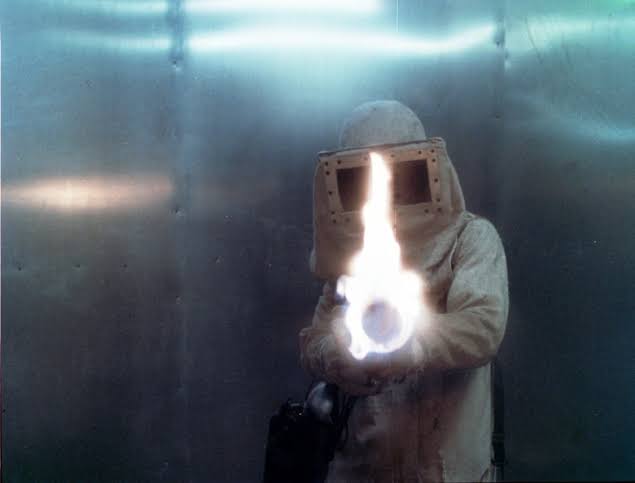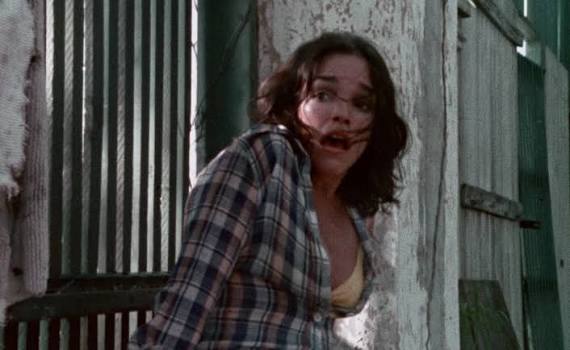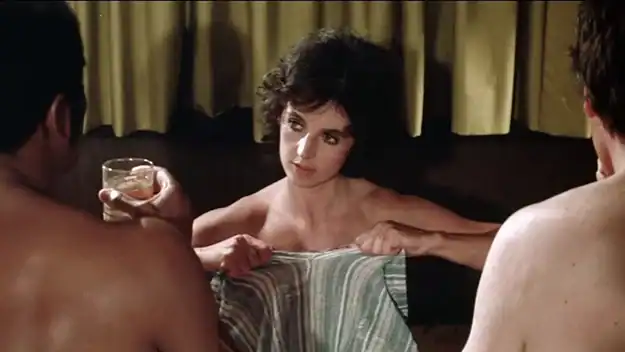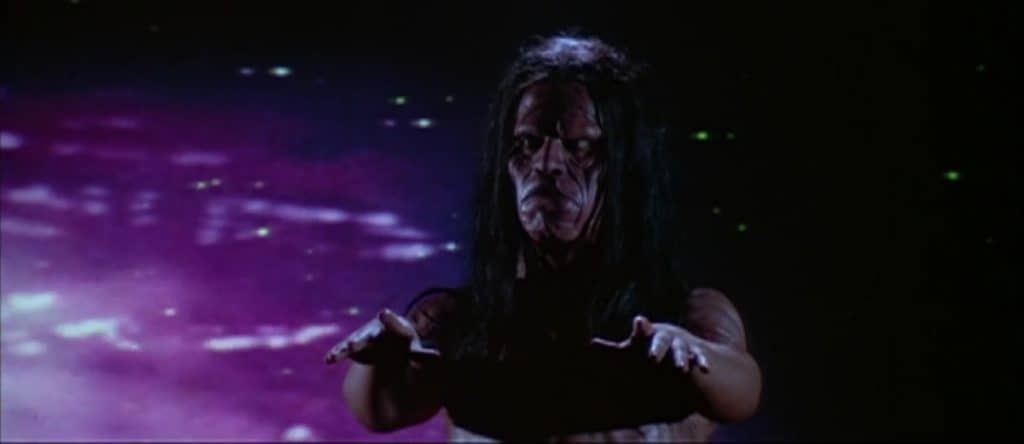



We’re going back to horror history class with Episode 212: Slashers Come of Age and Horror Finds Religion 1975-1979. Seven years ago, in the early days of the Scariest Things, we did some horror history, diving into some of the more obscure titles that you may not be aware of. We stopped at the early seventies, and then went on a very long hiatus. But now we are back with some (maybe) forgotten gems from 1975 to 1979. Friend of the podcast Ian Parker joins Eric and Mike in this deep dive.
It took a while, but we are back to our chronology of horror movies. We have picked up the baton and are moving our movie history lessons forward. The seventies were a turbulent period in history. The Hayes Code, now dead and defeated, is no longer. The early seventies started playing around in the margins with movies that pushed the boundaries of what was possible. The advent of the massive summer blockbuster began to separate movies into big-budget and indie-budget films, and horror was part of that trend.
Jaws (1975) and The Exorcist (1972) proved that with the right director, scary movies could bring in big money and be legitimate critical darlings as well. The doors opened for studios to pour big money into movies that would become The Omen, Alien, Invasion of the Body Snatchers, and Carrie, landmark movies all. Big-name actors with great pedigrees were coaxed into performing in big studio horror projects. Gregory Peck did The Omen. Faye Dunaway at the height of her career did The Eyes of Laura Mars. It wouldn’t be long before Jack Nicholson got cast in The Shining (1980), but we’ll get to that one later.
Having said all that, the studios weren’t quite all-in yet. There were a few pet projects out there. But the domain of the horror movie was still in the dilapidated old downtown movie houses and drive-in theaters. You couldn’t yet rent movies for home viewing. If you wanted to go see independent horror movies, you had to be willing to get down and dirty. The Cineplex wasn’t yet ready for showing off the gory delicacies that were being cooked up in the era when the boundaries between R and X hadn’t been settled yet.
Slasher Movies Come of Age
Horror never forgot its roots. You could still make a low-budget movie, with no-name actors, scare some teenagers, and turn a profit. But a guy in a rubber suit wasn’t going to cut it anymore. Real explicit violence and raw visceral horror are now how to make a memorable mark. Following in the footsteps of Black Christmas (1972), Last House on the Left (1972), and The Texas Chainsaw Massacre (1974), the slasher film was going to find the sweet spot of low budget and mass appeal. Enter Halloween (1978). Stabbing and spooking were now moving into the suburbs. On a budget of $325,000, Halloween would go on to earn $47,160,000. On a budget of $325,000, Halloween would go on to earn $47,160,000. Hollywood noticed.
The impact of Halloween would be felt primarily in the early eighties, but a few filmmakers picked up on the trend early. The slasher films influenced directly in the wake of Halloween include: Don’t Go Into the House (1979), Silent Scream (1979), Tourist Trap (1979), Driller Killer (1979), Prom Night (1980), Maniac (1980), Friday the 13th (1980), Don’t Go into the Woods (1981), Madman (1981), Happy Birthday to Me (1981), My Bloody Valentine (1981), The Burning (1981), The House on Sorority Row (1982), and The Slumber Party Massacre (1982). All of these films featured a masked killer (usually) and some sort of stabbing weapon (usually), and oblivious teen victims (usually), with sexual activity usually as part of the equation (usually)… and a final girl (usually). That’s the modern slasher template. It didn’t take long for filmmakers to figure out the formula.
Our great directors who would lead horror for the next twenty years were in place. John Carpenter, Tobe Hooper, and Wes Craven had their knives out and were ready to dominate the field. This genre still felt fresh. The sequels had yet to take control of the industry, and the concept felt raw and scary. This trend would find its killer’s stride in the 80’s, but this is when the slasher movie came out of the shadows.
Horror Gets Really Weird, and Discovers God
While the sixties still had a safety belt on, and the eighties went for the reliable thrills, the seventies was a period that allowed directors to stretch out their ideas. The early seventies also contributed a number of strange films, but it is hard to match the back half of the seventies with the likes of The Manitou (1976), Phantasm (1979), Hausu (1977), and Eraserhead (1977), which brought wildly original concepts to the table.
Religion was a big thing too. Conventionally, there were movies like The Omen and The Exorcist that were, while very scary, using traditional good-and-evil concepts. This era also had a more counter-cultural and artistic interpretation of holy horror. God Told Me To (1976) and The Visitor (1979) were gonzo strange concepts that never found an audience, but were challenging with their takes of what celestial beings might be. What is Jesus, really? For that matter, what is God? An alien? Perhaps.
Truly strange, blasphemous stuff. Perhaps it was all the hallucinogens that were popular of the era. Cosmic horror found truth in a far-out metaphysical moment. It wouldn’t take long for the politicians and the morality police to put an end to such wild concepts. But in truth, the conservative backlash was waiting in the next decade. In the seventies, the liberal notions of acceptable content had plenty of room. That would be coming to an end soon, especially when movies could come home on cable TV and VHS.
The Scariest Things History of Horror Episodes
- Episode 22: The Silent Era 1920s
- Episode 25: The Rise and Fall of the Golden Age 1930’s and 1940s
- Episode 29: Horror Comes Back – The Matinee Era Part 1 1950-1954
- Episode 31: The Height of the Atomic Age – The Matinee Era Part 2 1955-1959
- Episode 51: The International Gothic Trend – Horror From 1960-1964
- Episode 53: The Diversification of Horror – Horror From 1965-1969
- Episode 57: Horror Gets Trippy – Horror From 1970-1974
Episode 213: Slashers Come of Age and Horror Finds Religion 1975-1979
Friend of the Podcast Ian Parker joins Eric and Mike to talk about some deep cut movies from the late seventies. We have tried to avoid the obvious stuff and to notify our audience about some curious gems that you might have missed when shuffling through your streaming options:
Podcast: Play in new window | Download | Embed