Authenticity. Ithaquaoozes authenticity. In an era where low-budget films can’t afford the real thing, and big studio projects use digital effects or even (shudder… AI…) to make the movie magic happen, director Casey Walker delivered a movie that feels tangibly real. It’s cold because it truly is Hoth-level cold outside. Walker’s labor of love, which took 14 years from concept to cinema, delivers one of the best horror films in a growingly stacked year for genre films. Casey was generous to share his thoughts on his movie with The Scariest Things.
Ithaqua was a gift for The H.P. Lovecraft Film Festival. Cosmic Horror movies are often small projects with big dreams, but threadbare budgets. Periodically, the festival receives a powerhouse cosmic horror movie with a mid-major studio budget and the means to deliver true spectacle. Hammer Studios rescued the film from the brink of shutting down, and Casey used the additional funds to round out his dream project. It was such a dream project of his that he sold his home to finance this film when things got tight.
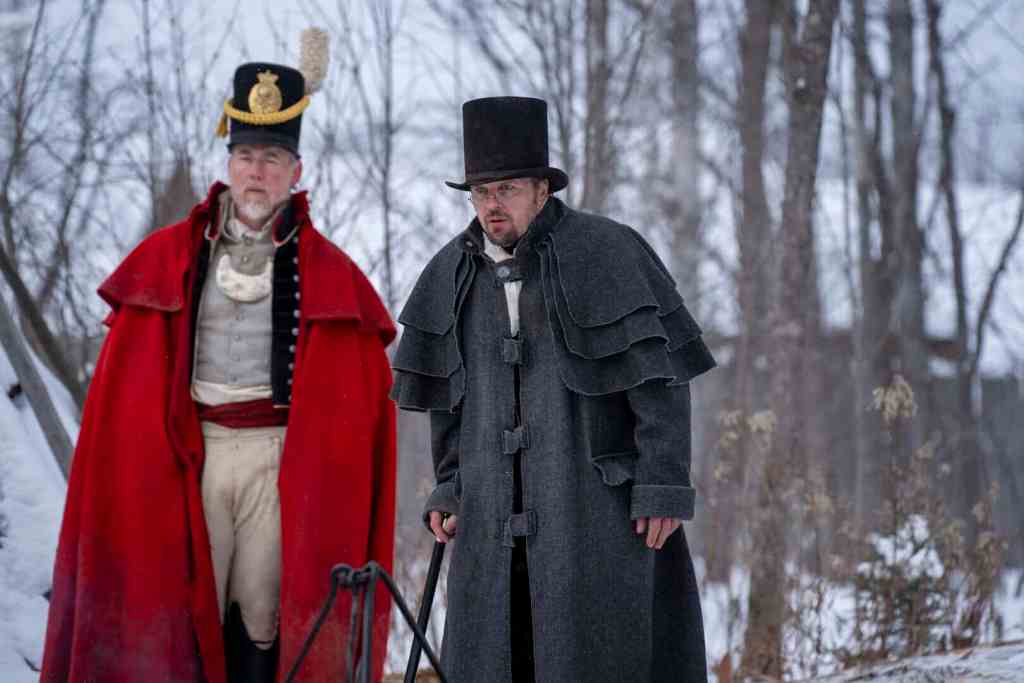
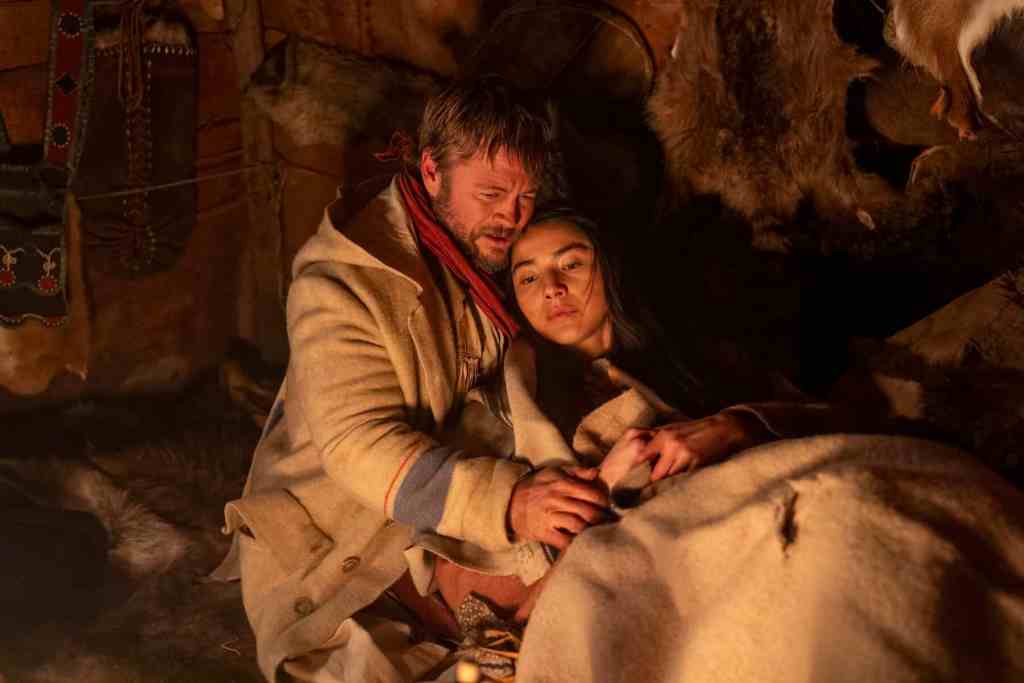
The film stars Luke Hemsworth, Kevin Durand, Leenah Robinson, Craig Lauzon, Pamela Matthews, and Michael Pitt. It takes place in 1821 Ontario, during a brutally cold and desolate winter. (A historical truth: this era was a “mini-ice age”… just ask Napoleon.) Food is scarce, and the residents of Fort William face starvation. The local Indigenous Ojibwe recognize that this is the work of a wicked spirit: Ithaqua, a bringer of famine and frozen death. The Fort orders the trappers and soldiers out to recover anything they can from other local tribes, or whatever they can trade for, but death lies waiting in this frozen hellscape.
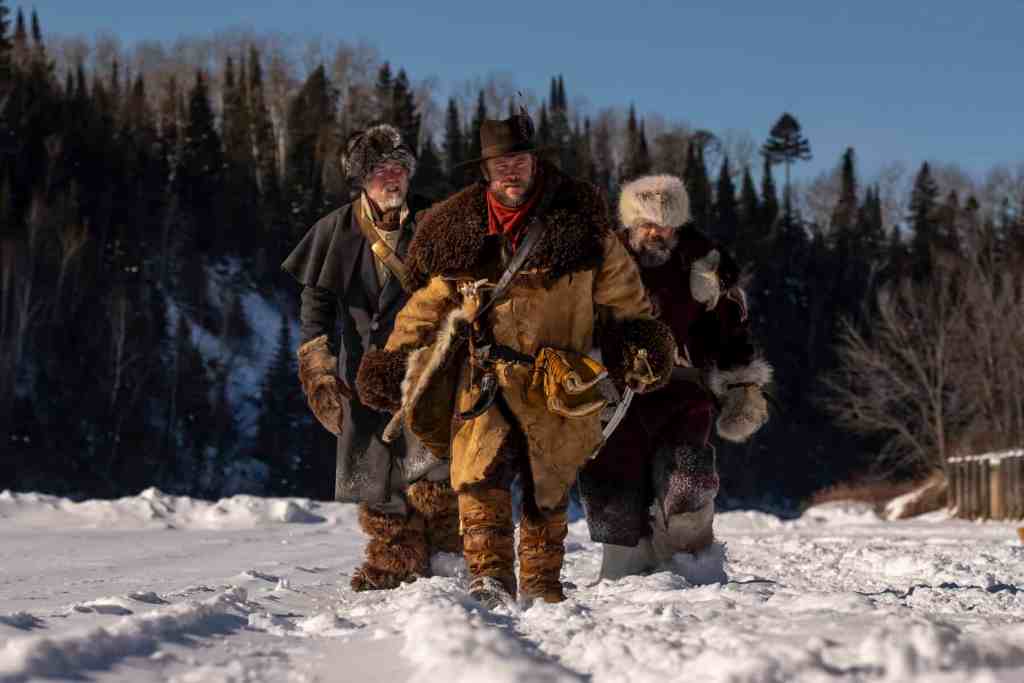
Kevin Durand, Luke Hemsworth, and Craig Lauzon in Ithaqua (2026)
The Production:
The story’s Lovecraftian roots come from August Derleth’s pulp fiction text, The Thing that Walked on the Wind, which was heavily influenced by Algernon Blackwood’s The Wendigo. It is a story with a significant chunk of cosmic horror lore. Wendigo stories have been done before, but this would be the first notable film introduction of Ithaqua.
Walker conveyed this by using a historical reenactment of a Thunder Bay, Canada, trading fort. His production team fabricated all of the period costumes and props. Pay particular attention to the doctor’s office, which oozes early 19th-century goods and equipment. Walker’s writing partner, Peter Vicaire, is half Ojibwe, and the indigenous cast could speak the native tongue.
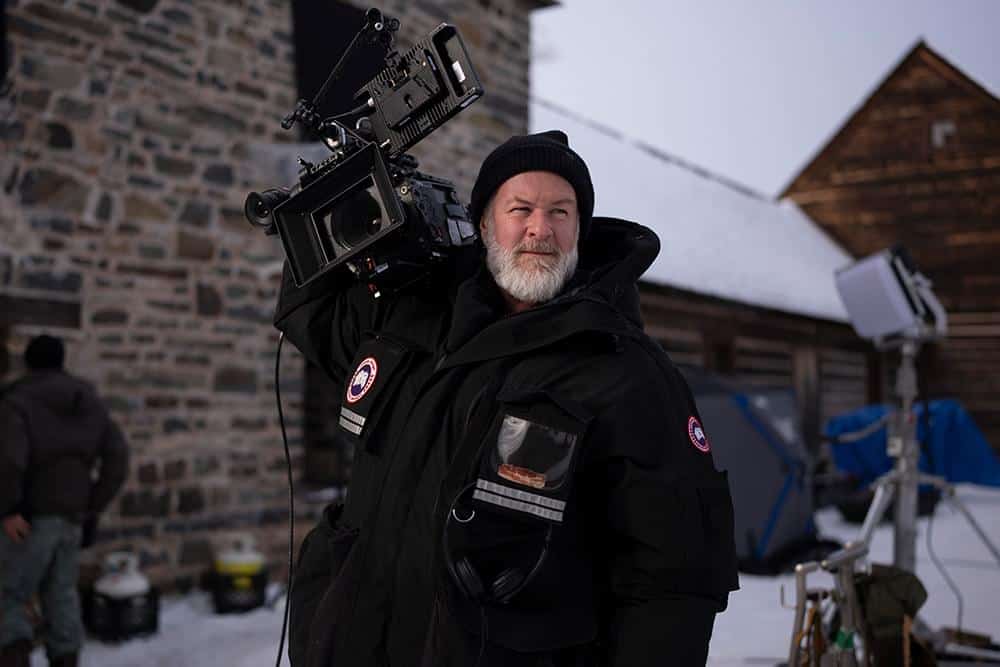
Most notably, the movie was shot in sub-freezing conditions on the North side of Lake Superior in December. The breath you see from the actors is not visual effects; it is truly freezing, even inside the saloon. You don’t have to instruct the actors to act like it’s cold… It’s COLD. Oh, Canada!
Ithaqua is off to the prestigious Sitges International Film Festival in Spain. (Which is the launching pad for many great genre films.) The movie will be getting a wide and streaming release in February of 2027, so be patient, and catch it on a big screen near you! For a full Scariest Things review, check out Joseph Perry’s review of the film here.
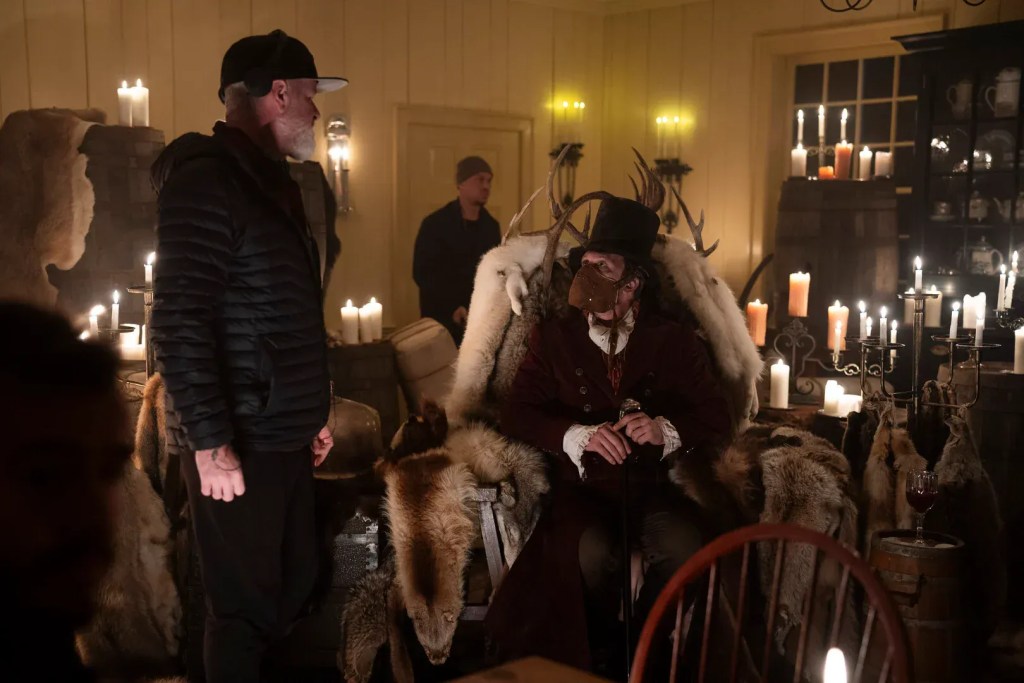
Behind the scenes on Ithaqua (2026): Casey Walker and Michael Pitt
The Interview with Casey Walker at the H.P. Lovecraft Film Festival
Once again, my thanks to Gwen and Brian Callahan for giving me green room access to the filmmakers on short notice! Casey Walker spent lots of time with the other directors and filmmakers at the festival, and they traveled in a pack around Portland; it was a great Horror Community moment. My thanks to Casey for spending some time to talk about his movie with me.
Here is Casey’s press release statement about his film:
I have heard Ithaqua described as ‘The Witch meets The Revenant.’ I find that comparison deceptively cheerful. Both of those films are stories of faith. Ithaqua is a story about what faith cannot fix: the ordinary, structural greed of men who believe the world owes them its flesh. The Ithaqua — emaciated, cannibalistic, born from the moment a man’s appetite overrides every social sanction — is not a metaphor I invented. They are a description that was already here, waiting.
THE PLACE
I grew up in Thunder Bay, Ontario, witnessing the unspoken atrocities that the Indigenous community around me still endures in this modern age. It made me ask a question I have spent fifteen years trying to answer: how is it possible that nothing has changed in 175 years? In every generation, men arrive at this land with the same appetite. They take the furs, the timber, the oil, the water. They take the women. They take the children. They call it commerce.
After fifteen years of making this film — watching the news, watching what happens to Indigenous communities in Canada in the present tense — I no longer believe history is a warning. It is a pattern. And as recent years have proven, it can still get worse. I worked at Fort William Historical Park during film school summers. Almost a thousand miles from any city, ringed by boreal forest, frozen for half the year: the landscape in this film is not a backdrop. It is the primary moral force. The snow absorbs everything — sound, colour, blood — until what remains is exposed.
THE FORMAL LANGUAGE
The visual language moves between fixed durational frames — refusing the cut at the moment of crisis — and handheld intimacy with faces that cannot process what they are seeing. The colour arc enacts the moral journey: ashen blue starvation in Act One; blood red as hunger is fed in Act Two; hellish firelight warmth in Act Three, where acceptance becomes indistinguishable from damnation. Every scene is lit by candle, lamp, or fire — chiaroscuro not as an aesthetic choice but as historical fact. Electricity did not exist at Fort William in 1821. The shadows are not chosen. They are what was there. Violence in this film is quick, brutal, and awkward. There is no excessive sound design to instruct the audience’s emotion. No slow motion. The camera does not dwell. What accumulates is not spectacle — it is the weight carried by the people who remain.
THE COMMUNITY
This film is trilingual — English, French, and Ojibwe/Cree — because that is what Fort William was. To have made it otherwise would have been a lie of the same order as the lies the film indicts. My writing and producing partner Peter Vicaire is Mi’kmaq — a prolific writer, historian, lawyer, and decorated US Marine who was on set every day to ensure the film’s authenticity. Craig Lauzon, who is Ojibwe and of the Bear Clan, plays Nicolette; it was his own decision to root the character in a Métis identity, because it was the honest choice. Kawennáhere Devery Jacobs was involved in the early development of Ahnung, and it was her suggestion that changed the grandmother’s role entirely — that Ahnung kill her own grandmother, because the ramifications of that act within the community would be more devastating than anything we could have scripted from the outside.
We had religious scholars sign off on the script and the use of the Wendigo myth. We received the blessing and support of the Fort William First Nation to film on their ancestral lands. The destroyed Indigenous village in the film was built in partnership with the Fort William First Nation, with members of that community involved in its construction. The people who built it understood what it meant to build a village that has been destroyed.
Ahnung and Nokomis are not victims of this plot. They are its most active moral agents. The missing and murdered Indigenous women and children of Canada are not named in this film. They are present in every scene in which a woman navigates a world that has decided her life is a resource. The audience will arrive there themselves, through what they witness.
WHY THIS FILM, NOW
The Ithaqua emerge from greed. The greed of colonization, of capitalism, of men who believe that taking is different from devouring. These are not historical themes. They are the themes of every morning’s news. This is a cautionary tale with no heroes — only, occasionally, fleeting glimmers of heroism. I did not want to make a film that offers the audience an exit. I wanted to make a film that keeps them in the cold, with the knowledge that the cold has always been there, and that the people who understood it best were the ones whose warnings we did not hear.
Luke Hemsworth and Leenah Robinson in Ithaqua (2026)