

Intensity: 🩸🩸🩸 out of 🩸🩸🩸🩸🩸
Directed by Chris Schwab
Written by Chris Schwab and Bram Stoker
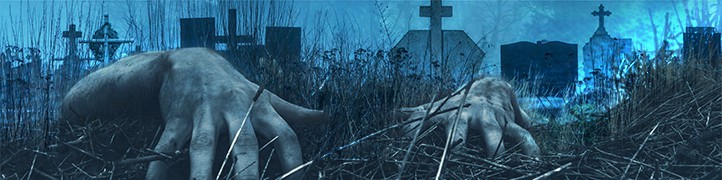
Sometimes it takes an indie take on a classic to make the story scary again. Dracula: The Night Around Us does exactly that. It is a dark, brooding, modern take on the Bram Stoker classic. This film condenses the story, focusing its attention on Seward, Mina, Lucy, and Renfield. This makes Dracula’s presence much more ominous, and in an era when it is hard to make a horror fan uneasy, Literal chills ran through my nervous system. This film won the Goul D’Or award at the Portland Horror Film Festival for the best Feature at the Festival in 2026.
Color me skeptical when it comes to rebooting classic horror movie monsters. I was doubtful that a Dracula movie could be rendered scary again. Brian Callahan, co-director of the Portland Horror Film Festival, informed me that Dracula: The Night Around Us was legit scary. Yeah, right. The story is so familiar, and the path so well traveled, that it seems unlikely that Dracula could be made horrifying again.
Boy, was I wrong. This movie brought some legitimate scares. How did Chris Schwab pull this off? Some of this is because Dracula is utilized sparingly, so when he shows up, it really matters. Also, Schwab has chosen the more monstrous, more Nosferatu-like creature, similar to how Last Voyage of the Demeter used the vampire lord. (Also a pretty scary depiction of Dracula.) Largely, though, by concentrating on the protagonists, it raised the emotional stakes. I have ALWAYS and FREQUENTLY stated that the ability of a horror film to scare you is proportional to the attachment that is developed between the audience and the protagonists. Never in a Dracula film before have I wanted so badly for the protagonists to do well. Perhaps this is because the modern setting allowed a more empathetic situation. Or perhaps it was the rock-solid performances by the entire cast.
The Cast of Dracula: The Night Around Us
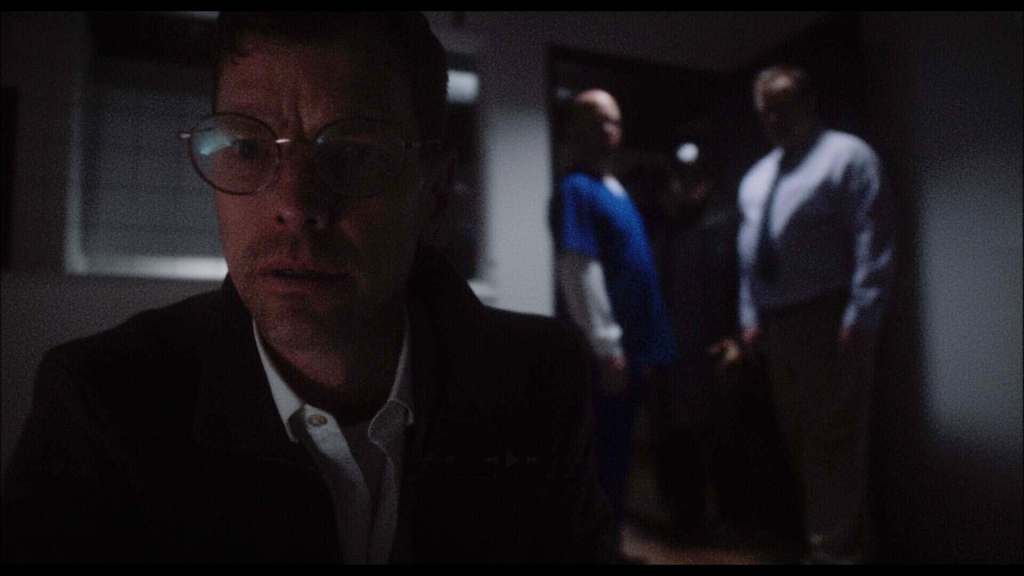
- Eric Toms plays Dr. John Seward, a psychologist working at a state hospital mental health ward.
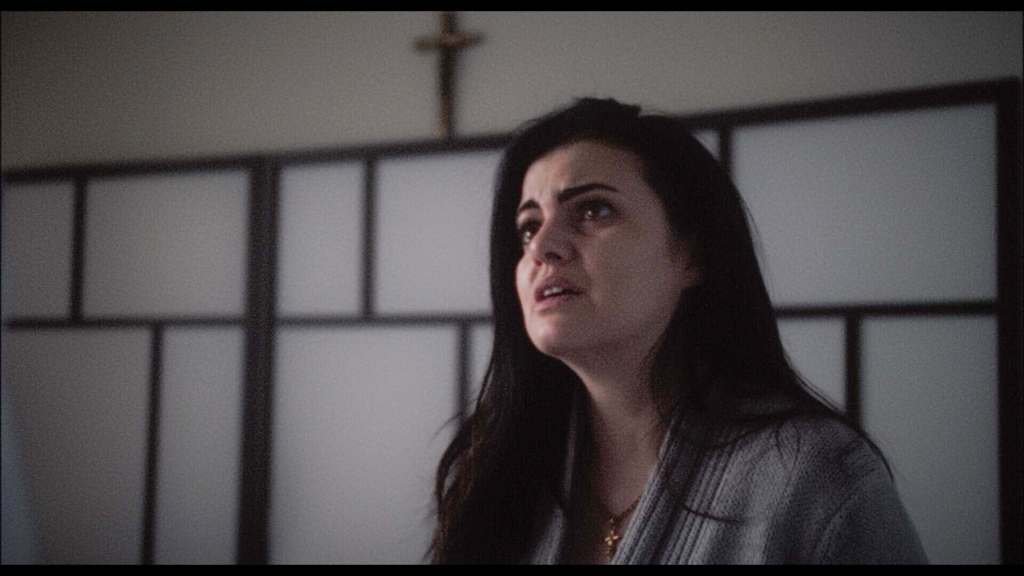
- Marlene McCohen plays Mina, a single mom and Sewards new apartment neighbor.
- Raelan Mackiewicz plays Lucy, Mina’s young daughter, who has a penchant for sleepwalking.
- Spencer Witzel plays Renfield, a man incarcerated at the
- Brenton Jones plays Dracula. Yeah. That guy.
- Isabela Penagos plays Sammi, one of Dracula’s minions.
- William Gabriel Grier plays Andy, who picks up a hitchhiker he should have left by the side of the road.
A Synopsis of Dracula: The Night Around Us
Dracula is living in the Sewers in modern-day America. He is assembling loyal minions to do his bidding. His army grows by proxy force of his thralls, the power of his telepathic suggestion, and his own nocturnal feeding habits. John Seward is an unassuming psychologist about to be thrust into the eye of this evil plot. As he heads off for work at the state mental ward, he meets his new neighbor, Mina, and her daughter, Lucy. Mina is initially surly and wary, clearly under a lot of stress. Lucy, however, is a goofball, and she and Seward engage in silly faces before Mina sharply puts an end to the nonsense.
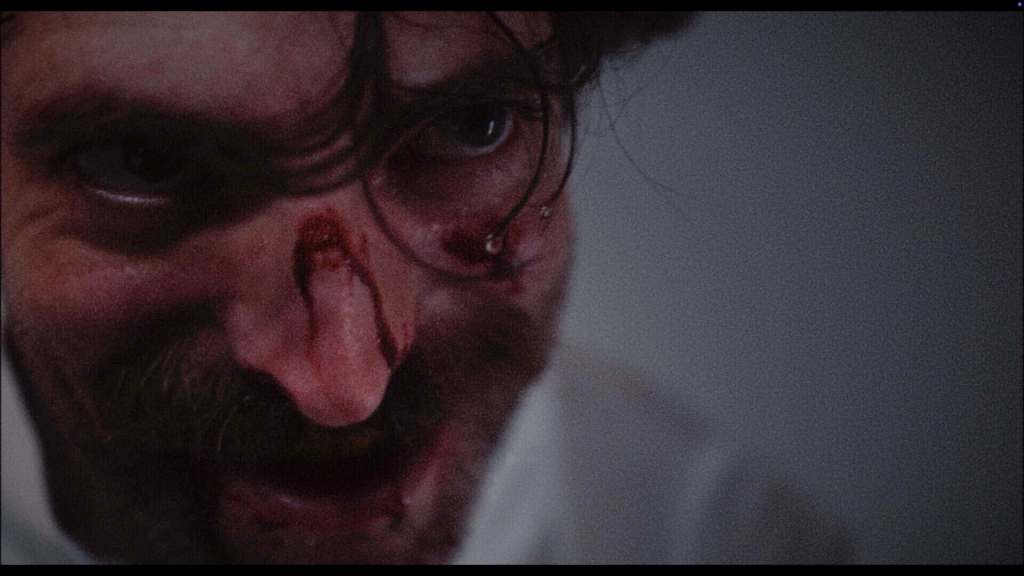
Arriving at the asylum, Seward meets one of Dracula’s minions, an emotionally shattered man named Renfield. The madman babbles about the coming of his master and is reduced to eating flies that have been accumulating in his cell. Seward prescribes some medicine, but before he can exit the prison cell, Renfield chomps down on Seward’s hand, spilling blood, and then greedily laps up Seward’s blood from the floor. As Seward arrives home after the brutal shift, he almost runs over Lucy, who he finds wandering in a trance in the apartment parking garage. He picks the girl up and returns her to Mina, who, without a word, receives her and closes the door.
The vampire continues to assert control over the city, attacking and turning unsuspecting citizens as they are caught unprepared after dark. The following day, Mina arrives at John’s door and apologizes for her rudeness. She invites Seward to dinner, and the three of them get acquainted. Before anything romantic can occur, however, Seward is summoned to the hospital because Renfield was caught after escaping back to a bridge underpass, where the lunatic was originally found. (It’s near a lair… hint… hint…)
Meanwhile, once again, Lucy is drawn from her slumber and sleepwalks into a busy freeway. Mina is late to react, and when she discovers her daughter, she is lying in the median, where something large, dark, and menacing is on top of her. You know who it is. Mina recovers Lucy, and John returns to try to diagnose the problem. But the wheels are in motion. They are marked by Dracula, and their lives are all in peril.
Evaluation:
This is a compact feature film. It still features three distinct acts and clocks in at around 70 minutes of runtime. Chris Schwab decided to lean hard on telling the tale of Seward and Renfield, jettisoning the Harker and Van Helsing characters we have come to know in Dracula lore. This simplification streamlines the story, and it succeeds because of the performances of Eric Toms and Spencer Witzel.
Seward is the everyman, pushed to the brink. He doesn’t know he is in over his head until it’s too late. Toms embues this character with an easy, likable charm. His interactions with Lucy are endearing. Seward and Mina are awkward, then warm, and then devastating. Eric Toms is a glue-guy, easy to identify with, and someone you can root for. Renfield is a character who can elevate an actor, and Witzel is absolutely magnetic in his wild-eyed and cackling performance. Where Seward is a calming presence, Renfield is pure chaos. Witzel also takes his time with the more disturbing aspects of Renfield, and Chris Schwab paces his scenes with a push and pull that really highlights the tension.
The depiction of Dracula is shocking. Schwab has gone full Nosferatu in the vampire’s appearance. Gone completely is any sense of regalness, charm, or sexy vampire. This is a feral force, oozing with menace. The vampire’s head is also uncannily large. It appears like a shadow that comes into focus, and once you realize what you are seeing, it quickly clarifies, and it’s creepy as hell. Dracula, in this film, is the embodiment of a jump scare. When you see him, your blood goes cold. Truly. The last time my body had that sort of reaction was a Pennywise jump scare, and before that was Hereditary. Those are high marks!
The mood and the look are, in a word, desaturated. This movie is dark. Both literally and figuratively. The mood is bleak, and as Dracula movies go, this one is a bit of a bummer. An interesting technique that Schwab employs is the intermixing of key dramatic sequences, with quick editing between simultaneous perils. It’s jarring, but effective. Our protagonists get put through the wringer in this movie, and it happens rather quickly. As mentioned earlier, this movie is short.
The Movie Might be Too Short
This is not a common concern for the Scariest Things. Many of us here at the Scariest Things prefer movies on the shorter side. (Though that’s not usually my take.) By using Dracula sparingly and drawing on the knowledge we have about the character going into the movie, the story cuts a fairly straight line. Dracula’s motivations are largely unknown. His back story is not discussed much, nor are the usual vampire tropes. Dracula is like Batman; he is so ubiquitous that you can get away without a lot of exposition.
Normally, that’s great. In this case, I think a little more fleshing out of the villain and monster would be appreciated. A little more time with Mina, Lucy, and Seward wouldn’t hurt either. Usually, in Dracula films, Van Helsing provides the exposition and the history. He’s not here this time. This version of the film felt more like Seward vs. Renfield than Seward vs. Dracula. Some extra weight of Seward tracking and battling Dracula would add dramatic weight to the story. However, the climactic scene will be forever etched in my brain, and it features Toms and Witzel. In my interview with Schwab, he intimated that he would love to add some flesh to the story. He worked to a tight budget, and for what he produced, he made a lean, mean vampire movie.
Concluding Thoughts
I saw the World Premiere of Dracula: The Night Around Us. Apart from the length of the movie, my other quibble is the title. It’s hard to remember! It does capture the attitude that Dracula is more of an ominous presence than an actual character in this movie. Dracula doesn’t even speak. Having said all that, this was a great feature film to highlight for PHFF. It certainly was the scariest of the 11 feature films shown at the festival.
To reiterate what really works:
- Great performances by Eric Toms and Stewart Witzel.
- Moody atmospherics and a startlingly scary Dracula.
- A nod to liminal horror. Chris Schwab effectively uses close-ups and slows the pacing to build tension. The liminal styling makes both Dracula and Renfield scarier.
- A focused storyline that doesn’t get bogged down with a lot of re-hashed tropes.
- A successful modern adaptation of a 19th-century Victorian tale.
The movie is not rated by the MPAA. It would certainly earn an R rating for the gore and intensity of the film, plus naughty language. No sex or nudity, though if you get triggered by violence to children, this is a warning to you. Since this was the World Premiere, the film is just starting its film festival circuit run. Keep your eyes open for it if you are attending a horror film festival near you. It’s worth a watch.
Review by Eric Li
The Scariest Things Interview with Chris Schwab:
When getting the chance to talk to Chris, I had a number of questions about how to approach a movie like this. As stated before, there are many difficulties involved with reworking a well-known classic film. How do you make Dracula scary for a largely desensitized fan base? What tropes do you keep, and what do you not use for the story? And when modernizing the movie, how do you handle the characters’ knowledge of vampires while knowing the audience knows many of the rules? Schwab manages this by keeping things simple. But to get his first-hand take on these questions, give the interview a listen.
What I love most about interviewing movie makers is that I am constantly learning with each conversation. I am still a relative neophyte when it comes to film, but each interview adds wisdom to my memory bank. I hope you get the same feeling out of listening to these discussions.
Also included is the Question and Answer session following the world premiere at the Clinton Theater, for the Portland Horror Film Festival.
Podcast: Play in new window | Download | Embed


