

Intensity: 🩸🩸🩸 out of 🩸🩸🩸🩸🩸
Showrunner/Creator: Noah Hawley
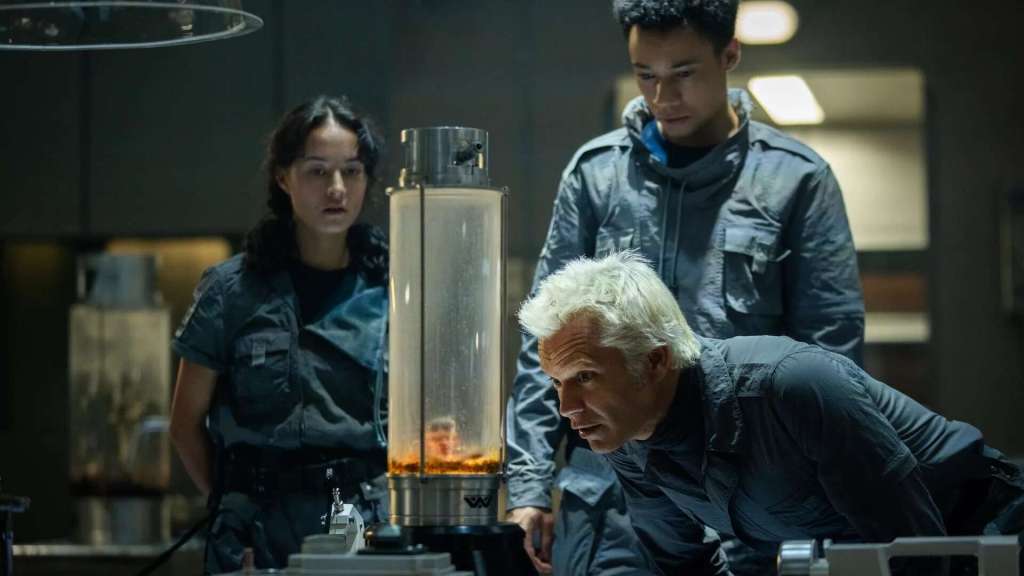
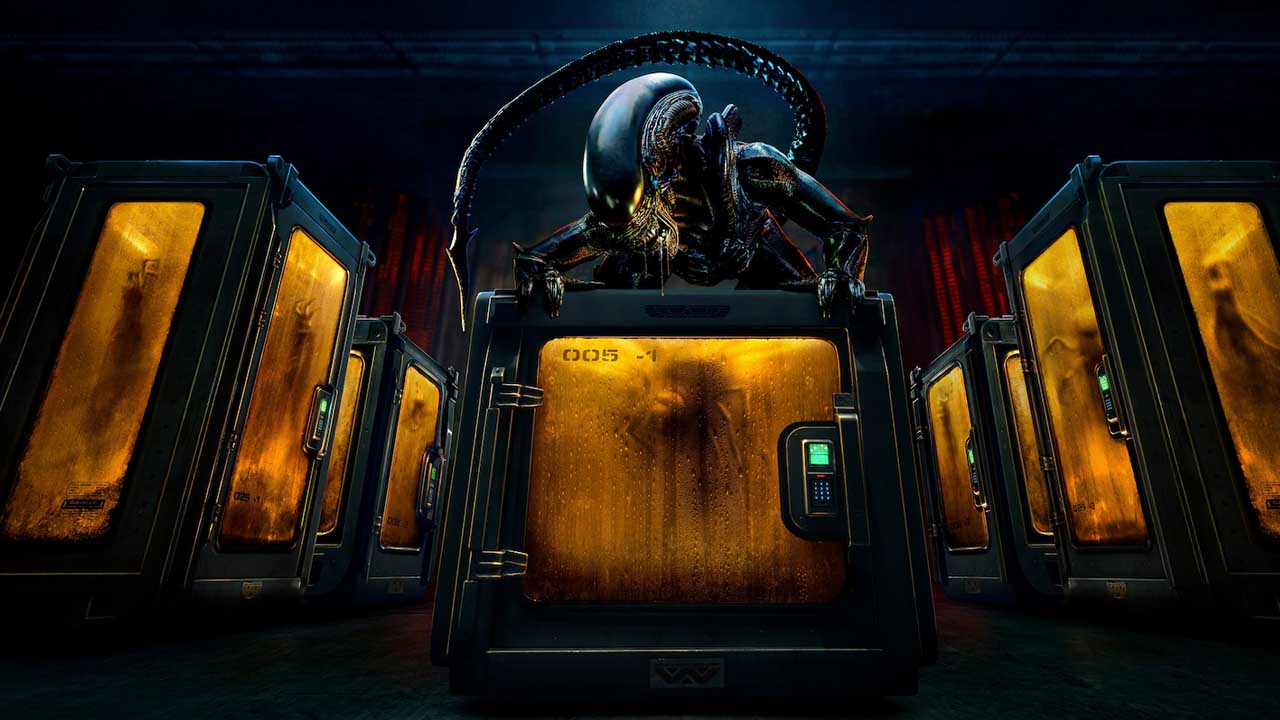
Apparently, the long TV format suits Alien perfectly. Fox continues its remarkable rehabilitation of its two valuable action/horror IPs, with Alien Earth doing for the xenomorph franchise what Prey did for the Predator franchise. It has injected lyrical symbolism into a series that has waxed and waned in intellectual rigor.
When I found out that the Alien franchise was going to receive a television show based on the xenomorphs reaching Earth, I was skeptical. It would be so easy to take the easy route and create a formula that played like The Walking Dead with face huggers. Exiting? Perhaps, but it would be covering familiar territory, both from a thematic and narrative standpoint. We have seen efforts like Aliens vs. Predator and have been left underwhelmed. A predictable formula ground into an easily recognizable sausage.
I am glad to report that Noah Hawley has instead taken this direction, where the xenomorphs are the surrounding context rather than the direct boogeymen. The central theme of the nature of what it means to be human, as put under pressure by parasitic killing machines, has proven to be deep, complex, and hugely entertaining. Most encouragingly, by doing so, the production team has managed to keep the story scary. Introducing new alien species brings a freshness to the proceedings. What do these things do? Well… It’s impressive and brutal, keeping the viewers imagining the possibilities and delivering the gory goods.
Meanwhile, the xenomorphs perform from their old bag of tricks. The story utilizes the recognizable monstrous behaviors and powers to frame audience expectations. The benefit of the long-format show is that it allows for frequent injections of alien horror, while still concentrating the bulk of the story on the existential science-fiction elements, which proves to be the show’s strength.
This essay evaluates the metaphorical and symbolic potency of these themes.
The Main Players of Alien: Earth
- Sydney Chandler plays Wendy, the first hybrid being created by transferring a human consciousness to an artificial body. She was a girl with a terminal illness named Marcy. Prodigy transferred her mind and memories into a young woman’s body, and she retains only a child’s experiences and knowledge.
- Alex Lawther plays Joe Hermit, Marcy’s older brother. Joe believes Marcy died, having went to her funeral. He now serves as a medic for a private army search and rescue team for the Prodigy mega-corporation.
- Samuel Blenkin plays Boy Kavalier, the youngest man ever to become a trillionaire. Kavalier is a brilliant but highly irresponsible owner of Prodigy, who owns a private tropical island named Neverland that serves as his base of operations.
- Timothy Olyphant plays Kirsch, Prodigy’s chief scientist, and the mentor and trainer for Wendy and the Lost Boys.
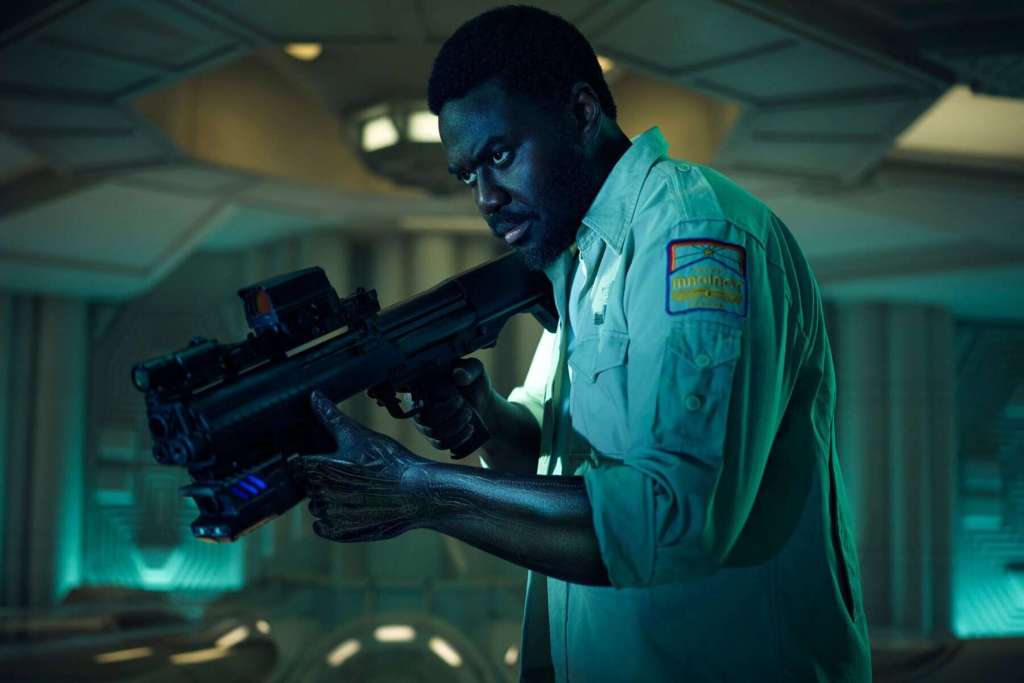
- Babou Ceesay plays Morrow, the USCSS Maginot’s security officer and cyborg, and the sole survivor of the ship’s crash landing.
- Essie Davis plays Dame Sylvia, a Prodigy psychologist assigned to the development of Wendy and the Lost Boys.
- Ardarsh Gourav plays Slightly, one of the Lost Boys, a highly suggestible hybrid.
- Jonathan Ajayi plays Smee, the most playful of the Lost Boys hybrids.
- Erana James plays Curly, the most ambitious of the Lost Boys hybrids.
- Lily Newmark plays Nibs, a highly sensitive and emotional Lost Boy hybrid.
- Kit Young plays Tootles, who is an inquisitive and aloof Lost Boy hybrid.
- David Rhysdahl plays Arthur Sylvia, one of the lead technicians on Prodigy’s artificial intelligence program.

The Symbolism of the Previous Alien Films
It would be unfair to say that the Alien franchise lacked ambition for science fiction allegory.
Ridley Scott and Dan O’Bannon’s original film, often hailed as a haunted house in space, with superior production values, actually had some strong symbolism. The implied sexual violence of all stages of the xenomorph, plus H.R. Giger’s wildly bizarre bio-mechanical and highly phallic creatures, were groundbreaking. The set designs highlighted the working-class nature of the Nostromo while incorporating some womb-like false safe havens, such as the sleeping chamber and the Mother mainframe control room.
James Cameron extended the messaging in his take on Aliens. Cameron created a Vietnam War allegory, highlighting the hubris of perceived armed superiority colliding with an environment that overwhelmed the Colonial Marines. Sigourney Weaver broadened the role of Ripley by going full mama bear with her relationship with Newt. The already established criticism of corporate greed expanded with the introduction of the slimy Burke to carry on the traitorous tradition of Ash from the first movie.
The franchise backslid over the next few films without elevating or enriching the material much. Then, Ridley Scott returned, and overcompensated by becoming TOO philosophical with Prometheus, and losing the mission statement. It was bold, but not well-orchestrated, and became a divisive move that stepped on its own spiked tail. Alien Covenant swung and missed again in Scott’s overreach by trying to bring back the creature feature, but still managed to twist itself into knots with the David/Walter weirdness.
The Symbolism of Alien: Earth
Alien Romulus put the franchise back on firm footing, with a solid outing. However, like The Force Awakens for the Star Wars franchise, it clung so closely to what made the first two films that it was an homage more than a new direction. It delivered a strong story with good characters and real intensity… but was it new? Not really.
With Alien: Earth, the long format of premium television enables real thematic expansion and in-depth character development. Noah Hawley is a master at world-building and character development. His work on Fargo and Legion is renowned for smart plotting and clear theming, and he has brought that to bear with Alien: Earth.
Alien Earth symbolism 1: Peter Pan – Eternal Youth
The overriding theme, almost to a fault, is the Peter Pan allegory. The desire to remain forever young. The proverbial fountain of youth. This isn’t subtext; it is a billboard, all lit up and demanding that you understand the message. Boy Kavalier is Peter Pan, here, with all the audacity and mischievousness of the flying boy from the J.M. Barrie stories. He is dismissive of any rational arguments from his senior advisors and is impulsive to the extreme. Kavalier has gambled and won. Big Time. He goes so far as to name his research island Neverland, and has fully embraced the concept of the boy who won’t grow up.
He has assigned Wendy to lead his band of hybrids and has named them The Lost Boys. (To the resentment of some of the girls in the group.) Wendy embraces the big sister leadership role. Wendy, in the Barrie stories, is the only one who can hear Tinkerbell. In Alien: Earth, Wendy is the only being who can hear the xenomorphs communicating. Does this mean that the xenos are fairies? Maybe! That is, if you can accept fairies as the ultimate killing machines.
The Lost Boys are struggling to cope with their new eternal youth, however. Their pre-adolescent minds are thrust into roles that they are not emotionally equipped to handle. As the show progresses, the cracks begin to show, and shattered minds begin to panic. The Lost Boys are at risk of being lost in their own psyches. Kavalier has forced this world upon them and puts them in situations that inevitably overwhelm the hybrids, much as Peter Pan would goad his merry band into things far more dangerous than they should participate in.

Alien Earth Symbolism 2: The Maginot is Hubris in Spaceship Form
There is a proud tradition of naming the ships in the Alien franchise with referential meaning. The Nostromo in Alien was named after the Joseph Conrad novel, and the Narcissus, the lifeboat in Alien, is another Conrad Novella. James Cameron extended the reference by naming the space corvette The USS Sulaco, which is the fictional setting of the town in Nostromo. The USCSS Petna, from Alien III is a reference to the ship in another Conrad story, Lord Jim. Later ships became more explicit, with The Prometheus, The Covenant, and Romulus carrying more metaphorical allusions.
The ship in Alien: Earth is the USCSS Maginot. This title references the Maginot Line, the French fixed line of fortifications along their eastern border with Germany. France fortified the 25-mile deep line of resistance with deep concrete bunkers, turrets, casements, and artillery emplacements. It was deep, broad, and well-connected. Named after the French Minister of War, Andre Maginot, many considered the line an invulnerable bulwark to potential German aggression.
The Germans decided to bypass it, employing their famed blitzkrieg movement through Belgium, and largely avoided a head-on attack. The Nazis exposed the weak flanks of the line and revealed gaping flaws in the defense. It has become a symbol of hubris and a white elephant, designed to defend against the previous war, rather than the new threat that would eventually overcome them. In Alien: Earth, the Maginot is the end-around maneuver that brings a potential world-killing collection of organisms directly to an unaware planet. Thanks, Weyland Yutani. Thanks, Prodigy.
Alien Earth Symbolism 3: Pinnocchio, the unstated metaphor
While the Peter Pan lore is explicit, there is another implicit symbolic children’s tale that often gets referenced when discussing artificial intelligence. The Steven Spielberg/Stanley Kubrick 2001 film A.I.: Artificial Intelligence tackled this theme directly, the blue fairy and all, but Alien: Earth cannot help but suggest the “real boy” dilemma.
Alien: Earth provides three variants of artificial humans.
- Cyborgs: cybernetically enhanced humans
- Synths: artificially intelligent beings
- Hybrids: synthetic beings downloaded with human consciousness
The question about what makes somebody human is the central theme in this show. If your previous biological self dies, but your mind and memory get transferred, is the new body still you? Will the adolescent mind continue to grow within an artificial construct? How are motivations and emotions handled by beings that don’t have hormones, glands, and the chemicals necessary to stimulate feelings? Can artificial beings love? Do androids dream of electric sheep?
This is one of the most evergreen themes in all of science fiction. Isaac Asimov, Arthur C. Clarke, Gene Roddenberry, Paolo Bacigalupi, Stanislaw Lem, George Lucas, Ekatarina Sedia, William Gibson, Charles Stross, Robert Heinlein, and Philip K. Dick: these titans of science fiction all tackled the fundamental questions about ethics and artificial intelligence. How do other humans treat artificial beings? What rights do they have? Can we trust them? What can we look forward to (or fear) in our future? So much heady material, but perhaps no literary lore hits the point than Pinnicchio.
Alien: Earth does not name-drop Pinnocchio, but it doesn’t have to. It’s inherent to all stories that delve into artificial intelligence. Being an artificial being can be a lonely life, but would they care? The hybrids in Alien: Earth are sorting through the process of artificial children who were real, but whose lives were nearing an end. Now, they find themselves asking what their lives will become. There are no strings on me.
Alien: Earth symbolism 4: We no longer send our best into space
Perhaps this is more of a trope than symbolism, but it is a river of content that flows from movie to movie, and it definitely is part of Alien: Earth.
I have now seen the first five episodes. The fifth episode is a tour-de-force homage to the original Alien movie, with a return to the Maginot to see what happened to the crew of that fated ship. It is a thrill ride and represents some of the best Alien horror ever filmed. It also exposes part of the world-building that has been established in a number of the other Alien films. Corporations now run the space lanes, and they don’t send out the best and brightest that humans can offer up.
The Maginot is crewed by a bunch of poorly motivated, careless, and in some cases, dimwitted crew members. Gone are the days of John Glenn, Yuri Gagarin, Sally Ride, and James Lovell, when only the most courageous and competent people got sent into space. That’s not to say that the Maginot crew are all bad people, though some of them truly are, but loyalty and controlability seem to be the prime requisites to be sent on science missions… at least if you work for Weyland Yutani.
Let’s take a look at who Weyland Yutani sent on a sensitive science exploration mission. Their flaws and inadequacies are an indictment of corporate greed, and the story is richer for it.
The Flawed and Ill-Fated Crew of the USCSS Maginot
- Babou Ceesay plays Morrow, *as noted above, who is the most competent and clear-thinking of the crew. His cunning and loyalty make him cold and distant to his colleagues.
- Richa Morjani plays Zaveri, the executive officer who takes control of the ship after the captain dies at the hand of a facehugger. Though she accepts the promotion readily, she is unready for command. She rattles easily.
- Amir Bourtros plays Rahim, the shaky-handed medical officer of the Maginot. He is going through the motions as the mission expires, and is prone to drinking during surgery.
- Michael Smiley plays Schmeul, the Maginot’s chief mechanic, a travel-worn mission veteran who has become jaded and bitter.
- Karen Aldridge plays Chibuzo, the mission’s xenobiologist, who is fatefully careless in her work in the bio-lab.
- Jamie Bisping plays Malachite, a barely educated mechanic’s apprentice. He’s likable but intellectually challenged.
- Andy Yu plays Mr. Teng, the ship’s navigator. His creepy behavior around sleeping women would get him booted out of most jobs. He might be a synthetic.
- Tom Moya plays Clem, Morrow’s security deputy. He may enjoy spying on his colleagues a bit too much, and he enjoys gossip.
- Enzo Cilenzi plays Petrovich, the greedy computer technician, whose frustrations spell trouble for the whole crew.
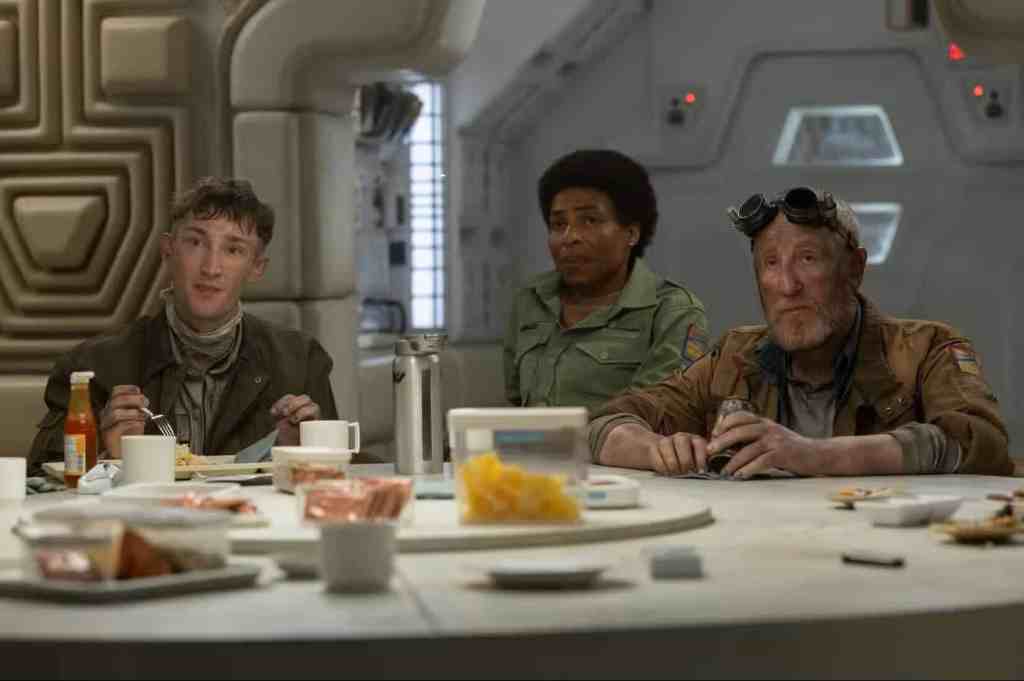
Like dropping a second full cast roster in a review post, the introduction of the flashback sequence of the fate of the Maginot was a welcome surprise. It takes very little time to recognize the relationships among the crew, and it becomes evident that any one of these yahoos could be the undoing of the mission. As it turns out, they all contributed to a total failure. This is what the future of space travel looks like!
A Proud Tradition of Bad Decision Making
In hindsight, poor decision-making and questionable actions have become a hallmark of the franchise. Starting with Kane’s curious inspection of the alien eggs, then Gorman’s failed leadership of the marine expedition in Aliens, and the multiple inexplicable splitting up of the protective group in Prometheus and Alien Covenant, all point to the same thing. Remember Millburn from Prometheus who tried to befriend a space leech? Or Ricks and Upworth having sex in a shower in Covenant? (Honestly, you’re forgiven if you’ve forgotten all the cast members of Covenant.) Not smart, guys, just really boneheaded.
I think you can chalk up the idiocy of the crew in the middle chapter movies to bad screenwriting. However, this does appear to be a constant. Humans, for all our intellectual power, can be incredibly stupid. Humans in the Alien franchise are reckless and oblivious. Sure, it looks safe enough to me! Let’s go check out this weird shit!
Noah Hawley was keenly aware of the intellectual liabilities of the franchise traditions, the mission, and the middling workers sent to do the job on the Maginot. He wrote this doozy piece of dialogue when Rahim, Teng, and Clem are laying their face-hugger-wearing comrade, Bronski, into a sleep chamber:
Rahim: Another victory for the enemy of reason.
Teng: What does that mean?
Rahim: It means this space bug is proof of how stupid smart people can be. Smart enough to build ships capable of space travel or splitting the atom and decoding the genome, but too stupid to realize we don’t bring parasites home with you.”
Well, at least they’re self-aware.
Conclusion:
Alien: Earth has surprised me with skill and craft. In particular, the writing and the themes. They are much deeper than I could have hoped for. This is true science fiction that explores big ideas. The long format of premium television allows for deep character dives. The format is something of a jelly donut. The surprise in the middle is Episode 5 “In Space, No One…” Centering the direct Alien homage allows for the new themes that aren’t as traditionally “Alien” to grow and develop. It then fulfils the promise of the traditional Alien fans, with fantastic scares and all the Easter Eggs you could hope for.
Both the Neverland cast and the Maginot cast are stellar. I think Babou Ceesay and Sydney Chandler will be able to pick their roles in the future. These are true star-making moments for them. Howley was able to recruit many of his actors from Fargo for key roles, and the rapport is evident throughout the production.
For all of the visual and technical craft that Ridley Scott and James Cameron have, they aren’t poets. Noah Hawley has the poet’s touch. As noted, he has populated his production with stellar actors playing dim characters, and yet it feels honest. The mistakes are human and are not forced on us through bad screenwriting. I cannot wait for the next three episodes this year, and dearly hope that this has been successful enough for FX to have a season 2.
Where to Watch Alien: Earth
Alien: Earth is playing on FX and can be streamed on Hulu. The violence and gore are on par with anything that has been in the franchise before, though due to editing and probably budgetary decisions, the acts of gore are often dealt with off-screen, though you almost always see the bloody aftermath. There is some sexual content, and some foul language (since the Lost Boys are still kids, they don’t swear much, or only do so self-consciously). This series should be easily accessible to viewers.
Review by Eric Li